
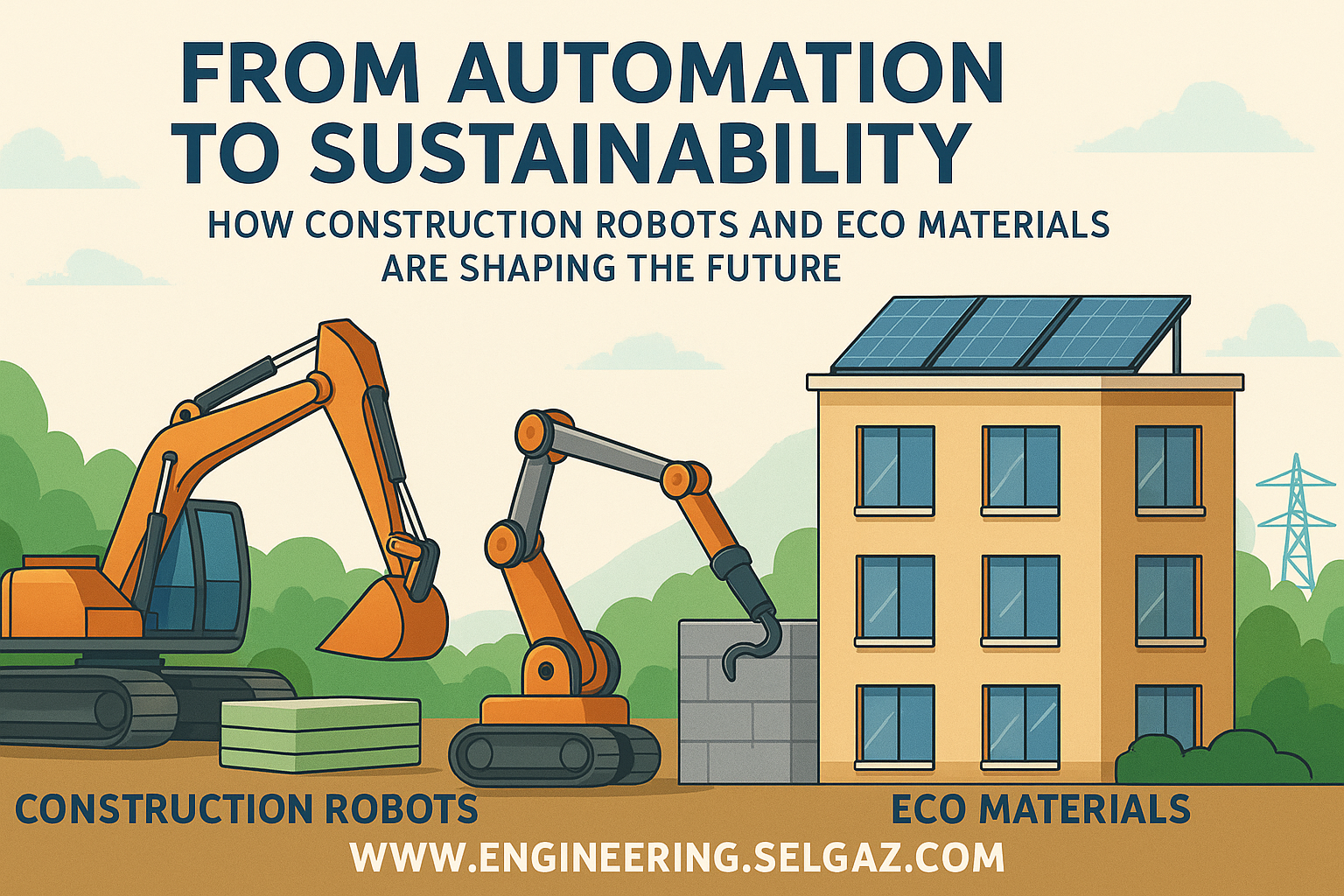
The Rise of Next-Gen Construction Robots and Sustainable Materials Shaping the Future of Building
Today, we embark on a journey into the world of next-generation construction robots and groundbreaking eco-friendly materials, technologies that are revolutionizing how we build. From humanoid machines performing heavy-duty tasks to nature-based innovations like hempcrete, the construction landscape in 2025 and beyond is changing faster than ever before.
The integration of robotics and sustainable materials into modern construction processes is more than just a technological leap, it’s a redefinition of how we design, build, and think about infrastructure. Precision, efficiency, and safety are being reimagined through robots like the HRP-5P, while new materials such as hempcrete are transforming the environmental impact of every project.
HRP-5P and the Robotic Workforce of the Future
Meet the HRP-5P, a highly advanced humanoid robot engineered to execute labor-intensive tasks such as wielding power tools and handling bulky items like drywall sheets. Standing at 182 cm and weighing 101 kg, this robot carries a payload of around 13 kg and operates autonomously in hazardous environments.
The HRP-5P is equipped with environmental sensors, object recognition, full-body motion planning, and a task management system, making it a technological marvel and a promising solution for labor shortages and jobsite safety.
Meanwhile, Route 2 is creating robots that specialize in cleaning and maintenance for both commercial and residential spaces. These autonomous robots are capable of floor scrubbing, wall washing, and even window cleaning. Equipped with intelligent navigation and obstacle avoidance, they minimize human input while delivering superior service and reducing operational costs.
Tiger Stone and Road Automation Technology
In the Netherlands, Vanku’s Tiger Stone machine has transformed how cobblestone pavements are laid. With a pace three times faster than traditional methods, Tiger Stone uses an electric motor and rubber metal tracks to lay roads between 3 to 6 meters wide. It can pave 300 square meters per day and only requires two workers to load bricks into a hopper.
This blend of human guidance and mechanical precision represents a new class of semi-automated construction equipment aimed at increasing efficiency without sacrificing control. Route 2 has also introduced automated putty application machines, ideal for interior and exterior wall finishes. These robots ensure seamless, high-quality plastering using various materials like gypsum and cement mortar, reducing labor and project duration while maintaining versatility and durability.
Digital Construction Platforms and 3D Printing Innovations
At MIT, the Digital Construction Platform (DCP) is rewriting the blueprint of building. This mobile track-based system features a large robotic arm with a smaller, highly precise manipulator for installing concrete, insulation, and other materials. With the ability to reach over 10 meters and perform additive manufacturing, welding, and excavation, the DCP successfully 3D-printed a 14.6-meter structure in just 13.5 hours.
Meanwhile, in Switzerland, researchers from ETH Zurich have developed robotic systems capable of building full-scale three-story homes using digital modeling and 3D printing. A 2-meter robotic arm, mounted on tracks, creates steel frameworks that act as both formwork and reinforcement. A special concrete mix is poured into these tightly spaced frameworks to prevent spillage, allowing for complex curves and contours.
Dynamic pouring techniques shape detailed architectural elements like window mullions. On the upper floors, robots handle assembly in controlled lab environments before transport. This methodology significantly reduces onsite waste, energy consumption, and time.
3D Printed Skyscrapers and High-Speed Bricklaying Robots
In Dubai, Kasic Construction is preparing to erect the world’s first 3D-printed skyscraper using cranes specifically engineered for vertical printing. Designed to reach heights over 80 meters, this project could redefine what’s structurally possible using robotic construction.
Equally revolutionary is the SAM 100 (Semi-Automated Mason), developed in the U.S. by Robotics Construction. This robot lays up to 2,000 bricks per hour, enough to complete a house in just days. Guided by 3D modeling, the SAM 100 features a conveyor belt, mortar pump, and manipulator system. It requires just two operators and has already built multiple large-scale facilities including universities and homes.
The SAM 100 doesn’t just automate, it also customizes. With the ability to apply logos using a specialized sprayer and maintain laser-leveled precision, this robot delivers both branding and build quality in one streamlined process.
ABB’s Industrial Robots and Precision in Heavy Lifting
ABB’s robotic manipulators, such as the IRB 6700 and IRB 7600, are setting a new bar in automated precision. These industrial robots handle large payloads with seamless accuracy, using sophisticated software and control systems to integrate with various production environments.
Whether lifting structural steel elements or performing highly repetitive precision tasks, these robots enhance productivity while minimizing risk and human fatigue. Their reliability makes them invaluable on construction sites where time, safety, and performance converge.
The Materials That Make the Future Sustainable
Alongside robotics, the future of construction also hinges on the materials we choose. In the face of climate change, resource scarcity, and stricter environmental regulations, sustainable materials are no longer optional, they’re essential.
Hempcrete, for instance, is gaining global attention for its carbon-negative properties and natural insulation. Countries like France and Ghana are pioneering large-scale hempcrete housing for its ability to regulate temperature, resist mold, and simplify construction. It’s not load-bearing but is ideal for wrapping structural frames.
Bamboo is another natural marvel, strong, flexible, and fast-growing, it’s being used for everything from structural framing to scaffolding in seismic zones. Similarly, recycled steel and reclaimed wood reduce the carbon footprint of large projects without compromising structural integrity.
Recycled glass and cork are finding new roles in cladding, flooring, and insulation, combining aesthetics with ecological performance. Ancient techniques like rammed earth and straw bale construction are also making a comeback, proving that innovation doesn’t always mean reinvention, sometimes, it means rediscovery.
Building Smarter, Safer, and Greener
The construction industry stands at a powerful intersection of robotics and sustainability. Whether it’s a humanoid robot laying bricks or 3D printers building curved facades, the tools of tomorrow are here today. Paired with eco-friendly materials, these technologies promise a smarter, safer, and more responsible way to build.
From design studios to job sites, contractors and engineers must now think beyond timelines and budgets, they must think in terms of climate impact, human safety, and long-term resilience. Robots and green materials aren’t replacing human craftsmanship; they’re enhancing it. Together, they represent a new standard of excellence in construction, where innovation meets intention.